There is Nothing Wrong With You
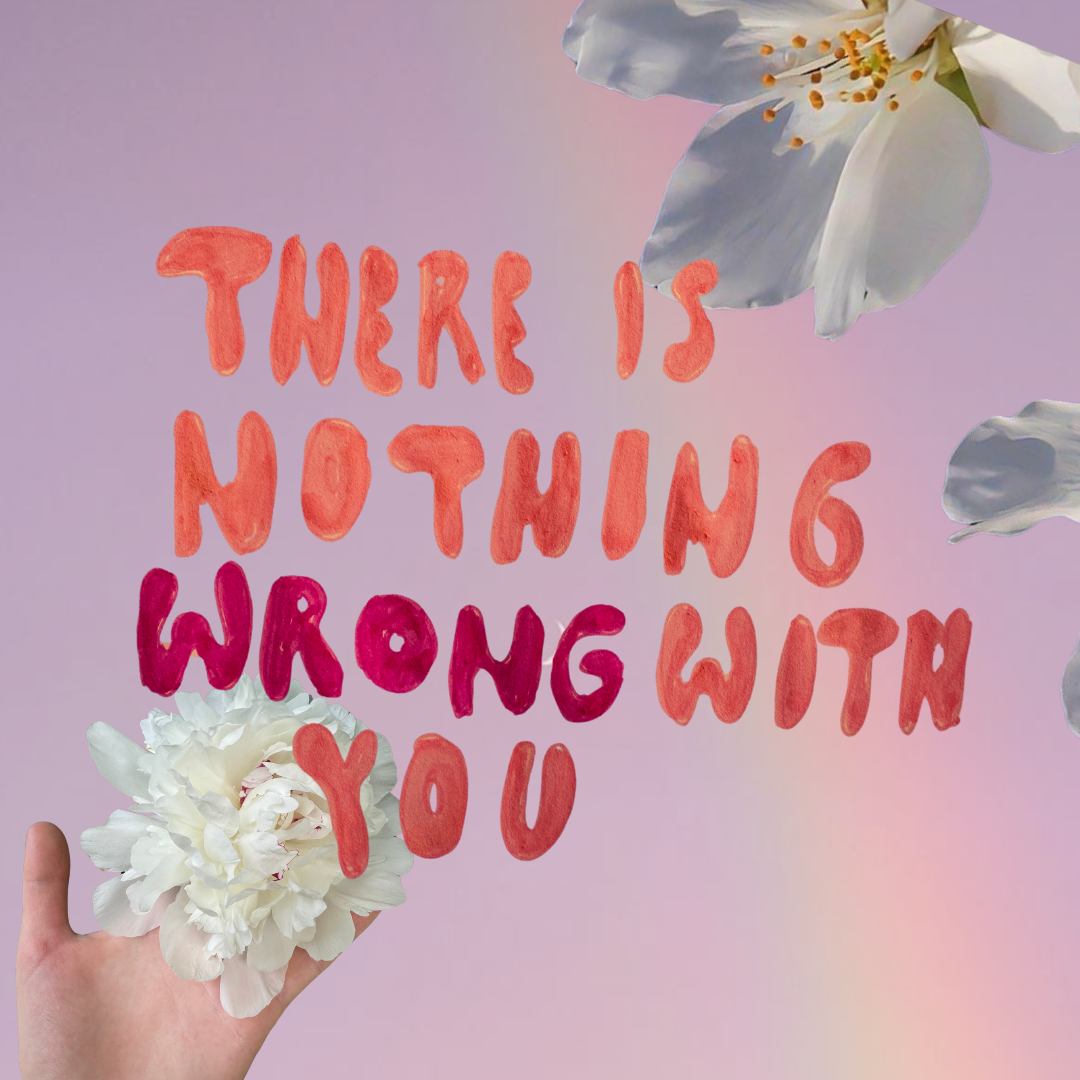
How many of us are walking around, feeling as if we are bad/wrong/not enough/it’s all our fault, etc? Even when these beliefs are hidden in our subconscious (aka not coming through as obvious “thoughts”) they can drive so much of our behaviour. These beliefs may cause us to make choices that hurt ourselves and those around us, rather than the healing we may be longing for.
My takeaway from the last 10 years learning about trauma at a collective and individual level is mainly this — there is a reason for the ways we think, feel, and behave (hint: it’s not that you’re uniquely fucked up). We can’t ignore the systemic factors that shape our understanding of things like survival, safety, control. There is a reason that our systems end up in survival mode.
Humans are incredibly good at survival, and it’s safe to say that the people in our lineages have had to survive a lot - from extreme weather events to wars to illnesses. We have been shaped by the experiences and lessons of our ancestors that occurred before we were born
Then, of course, our upbringing influences so much of how our brains are formed. Most of the brain is formed in childhood, and so the ways we learned to survive (which includes being cared for) shape the way we view and experience the world.
To make matters even more confusing, we may not even remember these events that had such influence over us. Memory works in interesting ways, especially when trauma is involved, but that’s a topic for another time…
Something I often see minimized by many of my clients and by the culture at large is our attachment/relational wounds. They’re often dismissed as “not-that-bad-as-that-other-very-terrible-thing”. Many of us have been told all of our lives how lucky we are in the context of the world, so who are we to complain?
The thing is that, as humans, we depend on our caregivers for a long time. And for the history of humanity, we have depended on the group we belong to to survive. This means that our nervous systems know deeply how important it is to
1. appease our caregivers in childhood and
2. stay “in” with our group throughout our life.
We are are *so good* at survival that any survival-related experiences and lessons are amplified in our brains, and often become long-term patterns that sometimes can become harmful or outdated. In other words: our circumstances change, but the patterns that once helped us to survive, don’t catch up.
One of the ways this could show up relationally is abandoning ourselves to “fit in”, minimizing our own needs, or acting in ways we’re not proud of because we have just reached our absolute limit. We don’t want to be the odd one out, we don’t want to make a “fuss” but something doesn’t feel right, and we assume that it’s us that’s the problem. In fact, many of us have been taught this directly or indirectly.
Oh, it hurts my heart, because what a barrier to healing it is — to think that we are bad by nature. If we’re just uniquely fucked up, then what hope is there? This belief does not help any of us, and even if we have behaved in ways we aren’t proud of (who hasn’t?), we can benefit from gently coming to understand why.
What did we need that we did not receive?
How did we learn to get our needs met?
Why were/are we so defensive in the first place?
What wounds do we carry?
What did we learn or not learn about how to regulate our emotions or communicate?
What other options exist?
In this process, we can come to understand how we were shaped, and what a different path forward may look like. This time, one that we choose.
There is (sorry 🤪) no quick fix. If these beliefs and patterns took years to form, possibly even decades or centuries if we really dig back into our family history. We can’t expect them to change overnight. We have to be patient with ourselves in this process, and sometimes things do get worse before they get better.
Yet, many things can and do help us live more authentically, more compassionately, and ultimately — freer. It’s a messy and imperfect and liberating process.
I want that for you.